Indoor Air Pollution and Lung Wellness
When people think about air pollution, they often imagine busy roads, factory smoke, or outdoor smog. However, the air inside homes, offices, and buildings can sometimes contain particles and pollutants as well. Because many individuals spend a large portion of their day indoors, the quality of indoor air may influence overall breathing comfort.
Indoor environments can contain a mixture of dust, microscopic particles, household chemicals, and other airborne materials. These elements may build up over time if ventilation is limited. Maintaining a clean and well-ventilated indoor space can therefore play an important role in supporting a comfortable breathing environment.
Understanding indoor air pollution helps people recognize how everyday surroundings may affect respiratory wellness and what simple steps may help create a fresher indoor atmosphere.
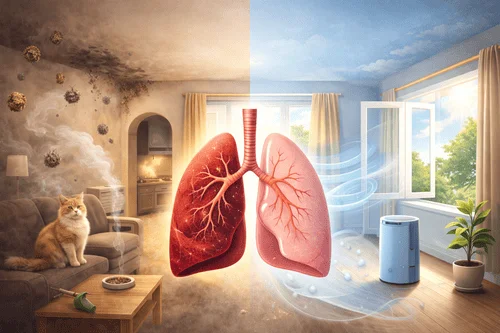
Why Indoor Air Quality Deserves Attention
Because people spend so much time indoors, the air inside homes and workspaces deserves just as much attention as outdoor air. Indoor breathing environments may be influenced by airflow, household habits, moisture, and the presence of microscopic particles that are not always easy to notice.
A cleaner indoor environment may help support better breathing comfort throughout the day. Paying attention to indoor conditions can be a practical way to support long-term respiratory wellness. Readers who want a broader overview can also explore our article on how air quality affects your breathing health.
What Is Indoor Air Pollution?
Indoor air pollution refers to airborne particles or substances that accumulate inside enclosed spaces. These particles can originate from everyday household activities, building materials, and even outdoor pollution entering through windows and doors.
Because indoor air circulates within a limited space, certain particles may remain suspended in the air for longer periods compared to outdoor environments. Without proper ventilation or airflow, these particles can gradually increase in concentration.
While most homes contain some level of airborne particles, awareness of common indoor pollution sources can help people take practical steps to maintain a cleaner environment. For another helpful perspective, read environmental factors that affect lung comfort.
Common Sources of Indoor Air Pollutants
Indoor air quality can be influenced by a variety of everyday sources. Some of these are visible, while others are microscopic and not easily noticed.
Typical indoor air pollutants may include:
- Dust particles that accumulate on furniture, carpets, and fabrics
- Pet dander from animals living inside the home
- Mold spores that develop in damp areas such as bathrooms or basements
- Smoke from cigarettes, cooking, or burning materials
- Chemical vapors released by cleaning products, paints, or sprays
- Airborne particles entering from outdoor pollution
These substances may circulate within the air and contribute to a feeling of stale or less comfortable indoor breathing conditions.
The Role of Ventilation in Indoor Air Quality
Ventilation is one of the most important factors in maintaining healthy indoor air conditions. When fresh air can move through a space, it helps dilute and remove airborne particles that might otherwise accumulate.
Homes or buildings with limited airflow may trap indoor pollutants for extended periods. Simple ventilation methods such as opening windows, using exhaust fans, or improving air circulation can help refresh indoor environments.
Air filtration systems and air purifiers may also assist in reducing certain airborne particles. These devices are often used in households to improve overall air freshness, particularly in enclosed spaces.
Household Habits That Influence Air Quality
Everyday household habits may also influence indoor air conditions. Activities such as cooking, cleaning, or using certain products can release particles or vapors into the air.
For example, some cleaning sprays and chemical products may release strong fumes that linger indoors if ventilation is limited. Similarly, dust buildup from carpets or upholstery can become airborne during regular movement within the home.
Maintaining a routine of cleaning surfaces, vacuuming floors, and replacing air filters may help reduce particle buildup. Using milder household products and ensuring adequate airflow during cleaning activities may also contribute to a more comfortable indoor environment.
Humidity and Moisture in Indoor Spaces
Humidity levels can also influence indoor air conditions. When moisture levels become too high, it may create conditions where mold or mildew can grow. These microscopic organisms release spores that may circulate through indoor air.
On the other hand, extremely dry air may cause indoor environments to feel uncomfortable as well. Maintaining balanced humidity levels can help support a healthier indoor climate.
Many households use humidifiers or dehumidifiers to regulate indoor moisture levels, especially in regions with extreme seasonal weather changes.
Creating a Cleaner Indoor Breathing Environment
Improving indoor air quality does not always require major changes. Often, small adjustments in daily habits can make a noticeable difference.
Some helpful practices include:
- Opening windows periodically to allow fresh air circulation
- Keeping living spaces clean and reducing dust buildup
- Maintaining ventilation in kitchens and bathrooms
- Replacing HVAC or air purifier filters regularly
- Monitoring indoor humidity levels
These simple habits can contribute to a fresher indoor atmosphere and support overall breathing comfort. You may also find it useful to read understanding the air quality index to better understand how air conditions are commonly measured.
Supporting Respiratory Wellness Through Awareness
Indoor air quality is only one part of the broader picture of respiratory wellness. Outdoor environmental conditions, lifestyle habits, and overall health practices also contribute to how comfortably people breathe each day.
Regular physical activity, proper hydration, balanced nutrition, and spending time in cleaner outdoor environments may all support overall respiratory health.
Staying informed about indoor air conditions, ventilation, humidity, and environmental pollutants can help people make more thoughtful choices about their living spaces and daily routines.
Conclusion
Indoor air pollution is an often overlooked factor that may influence breathing comfort in daily life. Because people spend significant time inside homes and buildings, the quality of indoor air deserves attention.
By understanding the sources of indoor pollutants and maintaining healthy ventilation and cleaning habits, individuals may create a more comfortable indoor breathing environment.
Small improvements in indoor air conditions, combined with healthy lifestyle choices, may contribute to long-term respiratory wellness and overall comfort.