How Air Quality Affects Your Breathing Health
Learn how outdoor pollution, airborne particles, and indoor irritants may influence respiratory comfort and why cleaner air matters for overall wellness.
Read MoreYour lungs work quietly every moment of the day, helping deliver oxygen that supports energy, focus, and overall well-being. Breathe Well Guide is an educational website created to share simple, helpful information about breathing health, air quality awareness, and the lifestyle habits that may support respiratory wellness.
From cleaner indoor spaces to everyday wellness routines, this website helps readers explore practical ways to better understand and support healthy breathing.

Breathing is essential to every function in the body. Healthy lungs help move oxygen into the bloodstream and remove carbon dioxide, supporting physical comfort and daily vitality. Because environmental conditions, lifestyle habits, and indoor air quality can all influence respiratory comfort, learning how to care for your lungs can be an important part of long-term wellness.
Even small daily choices may make a difference. Staying active, maintaining a cleaner home environment, and paying attention to air quality are all simple ways to support a healthier breathing routine.
Breathe Well Guide shares educational articles designed to help readers understand the many factors that may influence breathing comfort. Our content focuses on practical wellness topics that are easy to follow and relevant to everyday life.
Learn how pollution, dust, and indoor air conditions may affect breathing comfort.
Discover simple routines that may support respiratory wellness and overall well-being.
Explore how balanced meals and hydration habits contribute to a healthier lifestyle.
Find ways to create a cleaner, fresher home environment for more comfortable breathing.

Learn how outdoor pollution, airborne particles, and indoor irritants may influence respiratory comfort and why cleaner air matters for overall wellness.
Read More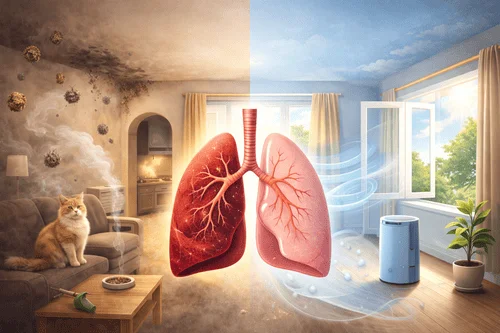
Explore common indoor factors such as dust, poor ventilation, and household irritants that may affect the air you breathe every day.
Read More
Learn how dust, smoke, humidity, pollution, and airflow may influence breathing comfort in everyday environments.
Read MoreHealthy breathing is often connected to simple, consistent habits. Regular movement helps encourage deeper breathing, while proper hydration supports overall body balance. Keeping living areas clean and well-ventilated may also help reduce exposure to dust and other airborne irritants.
Other helpful habits include spending time in fresh air when possible, maintaining a balanced diet, and being mindful of environmental triggers that may affect comfort. While no routine can replace medical care, a healthier lifestyle can play a supportive role in long-term respiratory wellness.
Many people explore natural ways to support their wellness goals, including mindful breathing practices, a nutrient-rich diet, hydration, and clean-air living habits. These lifestyle choices are often used as part of a broader personal wellness approach focused on maintaining comfort, balance, and daily vitality.
Educational awareness is key. Understanding how the environment and everyday routines influence breathing can help people make more informed decisions about their overall health habits.

Along with healthy habits and educational resources, some people also look into wellness supplements designed to support respiratory health. One example is Pulmo Balance, a respiratory support formula often explored by individuals interested in lung wellness and breathing support.
Learn MoreBreathe Well Guide is an educational website focused on breathing awareness, air quality, and practical wellness information. The purpose of this site is to help readers better understand how lifestyle habits and environmental conditions may influence respiratory comfort and overall wellness.
The information on this website is provided for educational purposes only and is not intended as medical advice, diagnosis, or treatment. Always consult a qualified healthcare professional for medical concerns or before making changes to your health routine.